


Every year, the Olympic sailing disciplines are put to the test: Are they still modern enough, or do they need to be replaced by new, more attractive classes, because otherwise the entire sport of sailing might be jeopardised in its Olympic existence? There are two sides to the currently revolving medal: On the one hand, sailing must remain attractive if it wants to defend its Olympic status against newly emerging spectacular sports. On the other hand, the regular exchange of boost classes also has disadvantages. For example, the fact that teams train hard and with great hardship for years for the Olympics, but their aspired Olympic participation is made impossible shortly before they reach the finish line because their discipline is abolished. You can imagine it like a javelin thrower who trains throughout his youth before the javelin throw is removed from the Olympic programme at the peak of his performance. The javelin thrower can no more switch to another discipline such as shot put or the 100 metre run at short notice than a Finn sailor weighing 90 to 100 kilograms can switch to the laser or even an RS:X surfer to a sailing boat. And the javelin thrower doesn't have to do this either, as his discipline has been a firmly established Olympic attraction since 1908.
Following a decision by the Events Committee of the World Sailing Federation, the Finn Dinghy, 470 Men, 470 Women and the RS:X Surfers have now been added to the list of Olympic sailing disciplines to be reviewed with a view to the 2024 Olympic regatta in Marseille. The vote by the Events Committee has so far only been a recommendation, which will now go to the World Council of the World Sailing Federation. Only after its evaluation and vote will it be clear which disciplines will actually have to undergo a thorough review. In this process, each Council member must nominate at least four disciplines for the intensive review. Only after this vote are the four disciplines to be reviewed determined.
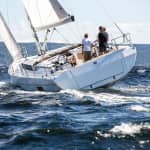
Here is a picture of the Olympic disciplines currently at risk:


The short list of five threatened disciplines was debated and voted on by 14 members of the Events Committee. The "blacklisted" disciplines each received 11 or 12 votes from those eligible to vote, while the other disciplines received no more than four or five votes. It had previously been discussed whether all ten Olympic sailing disciplines should be completely reconsidered. Also because, according to the World Sailing Federation, the International Olympic Committee does not appreciate terms such as the Finn Dinghy addition "heavyweight". In this discussion, however, those who had pointed out that a complete replacement of all existing disciplines was not planned anyway had prevailed. Before the decision on possible renewals, five disciplines are now certain to be renamed or renamed again: "Men's One Person Dinghy Fleetracing" (Laser), "Women's One Person Dinghy Fleetracing" (Laser Radial), "Men's Two Person Fleetracing" (49er), "Women's Two Person Fleetracing" (49erFX), "Mixed Two Person Fleetracing" (Nacra17). This is how the World Sailing Federation defines its core fleet racing disciplines.
As soon as the Council has made its decision on the four disciplines to be reviewed, the same body will decide in a second round of voting on "how to maintain the best possible balance within the disciplines". This decision will be made in June 2018 at the semi-annual meeting of the world federation in London. The entire selection process is expected to last until November 2018 and may even be extended by up to another full year to give all participating classes the chance to select new equipment and tests. The World Sailing Federation's detailed statement concludes almost sarcastically: "At the end of the entire process, the IOC will review each discipline in June 2020 and approve (or not) the proposed list (ed.: of the World Sailing Federation)."
Regardless of the complex election process, it remains a goal of the World Sailing Federation to bring its classes into compliance with European anti-monopoly laws. In this respect, the RS:X, Laser and Laser Radial classes will be reviewed. If necessary, there could be more than one manufacturer for the OneDesign sports equipment in future. The disadvantage: With several manufacturers, it may become more difficult to guarantee the uniformity of the material. At the Olympics and World Championships, the boats are provided by the manufacturers. The advantage: Several manufacturers in a boat class would presumably help to contain costs in these classes.
Here is a picture of the Olympic disciplines that are not currently at risk:



Tatjana Pokorny
Sports reporter
